Tag: sobriety

  • Unheard, But Healing: Learning to Be Seen in Sobriety

    For so many years, I felt unseen and unheard.

    My talents went unnoticed, my passions unappreciated, and slowly, that dimmed the light inside me.

    I used to pour my heart into things I loved, creative projects, ideas, words that mattered to me, only to be met with silence or surface-level support. The hardest part wasn’t the lack of applause, it was hearing people praise others for the same things I’d been doing all along. It left me wondering, Why not me? Why am I invisible in the eyes of the people I love most?

    That quiet kind of pain is heavy. It makes you want to retreat, to stop sharing, to stop caring. And for a long time, I did, or at least I tried to numb the ache of it.

    Before I got sober, those moments of being overlooked were my biggest triggers. I’d reach for a glass of wine to dull the sting or pour vodka just to escape the sadness of feeling like a shadow in my own life. I thought alcohol made me stronger, more confident, less affected. But the truth is, it only made me smaller. It silenced me even more.

    Now, almost three years into sobriety, I notice everything more clearly, the subtle hurts, the dismissive words, the moments of being left out or unheard. It’s almost as if clarity is both a blessing and a burden. Sobriety has stripped away the fog, and with it, all the excuses I used to make for people who couldn’t or wouldn’t see me.

    One of my biggest struggles lately has been feeling unheard.

    I share my heart, sometimes vulnerably, sometimes boldly, and it’s often met with a polite nod, a quick hug, or silence. That silence used to send me spiraling. It still stings sometimes.

    But instead of drinking, I write.

    Instead of hiding, I share my story.

    And instead of numbing, I sit with it, all of it.

    Because when I share here, whether it’s on my blog or social media, I am heard. Maybe not by the people I hoped would listen, but by strangers who have become kindred spirits. People who are walking through the same pain, fighting the same battles, and craving the same healing.

    That’s the beauty of sobriety, it reconnects you to your truth. It helps you realize that you don’t need validation to be valuable, and you don’t need applause to have purpose.

    Drinking won’t make them hear you.

    It won’t make them understand your heart.

    It won’t turn the silence into support.

    It will only deepen the sadness you’re trying so hard to escape.

    Sobriety isn’t just about removing alcohol.. it’s about reclaiming yourself. It’s about facing the hard things instead of drowning them. It’s about learning to stand tall in your truth, even when no one claps, and realizing that being seen by yourself is the most powerful recognition of all.

    If you’re in that place, where you feel unseen, unheard, or unappreciated, please know this: you’re not alone. So many of us in recovery have walked that same road. We’ve learned that the silence of others doesn’t define our worth, and it doesn’t get to dim our light anymore.

    Keep shining, even when no one notices.

    Keep showing up, even when no one claps.

    You’re building a life where you finally see and hear yourself, and that’s the most beautiful sound of all.

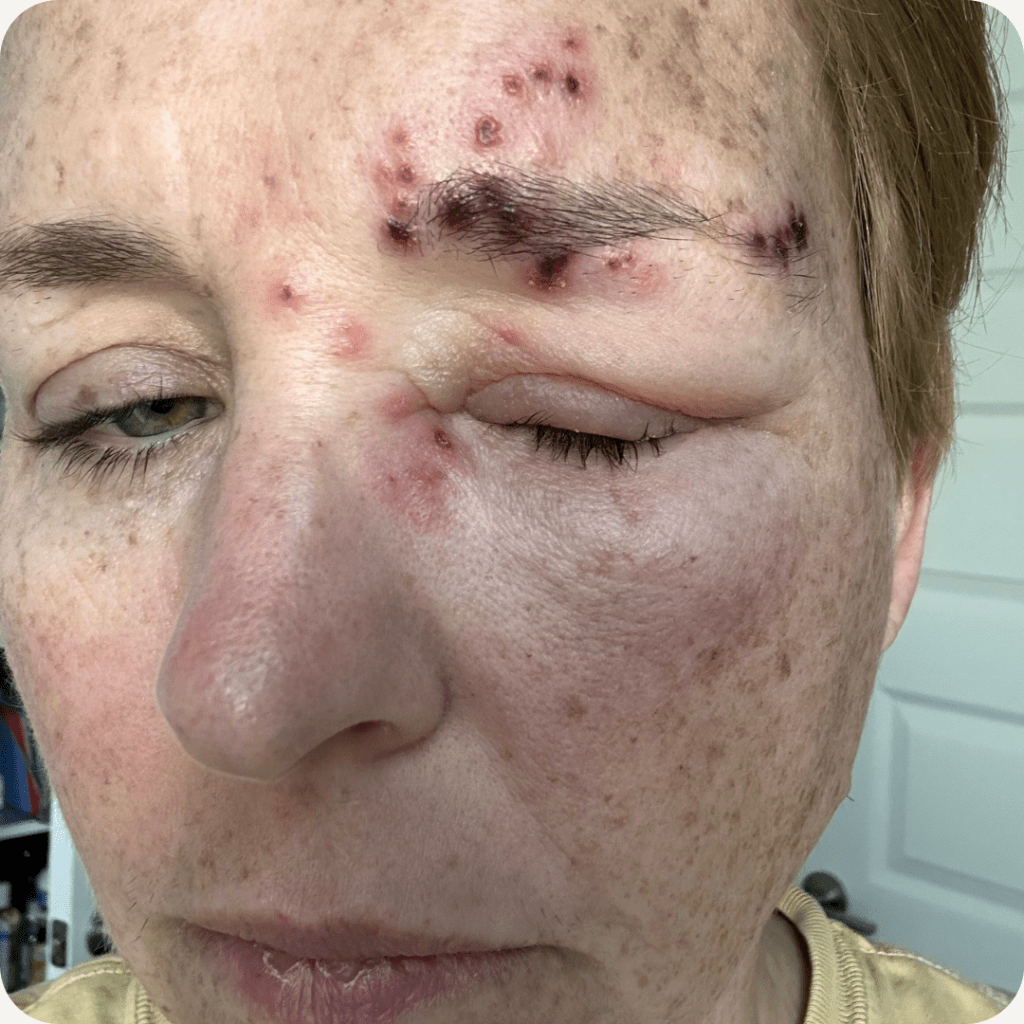
  • The Truth About My Shingles Battle

    I’ve been quiet lately—because I’ve been healing. Not just physically, but emotionally too.

    I recently had a painful shingles outbreak. And while it might sound like just another flare-up to some, for me, it was a harsh reminder: my body doesn’t handle stress like it used to.

    Any form of pressure—whether physical, emotional, or even just a busy week—can leave me completely broken. Weak. Worn down. Exhausted. And this time, it hit me hard.

    What made it even more difficult was realizing that in the past, I would’ve numbed all of this with alcohol. I wouldn’t have sat in the pain. I wouldn’t have felt the fear. I wouldn’t have had to face the questions like “Will I ever feel normal again?” or “Why is my body always fighting something?”

    But I’m sober now. And sobriety doesn’t let you run.

    It makes you feel everything.
    It forces you to sit in the mess.
    And it teaches you that healing isn’t always pretty—but it is powerful.

    I won’t lie. There were moments I wanted to escape, to go back to the old way of coping. But I didn’t. Because I’ve come too far to go backward.

    This is the raw, unfiltered side of sobriety that no one posts about.
    The sick days. The dark days. The lonely moments when your old life whispers, “It was easier back then.”

    But it wasn’t. I was just more numb.
    Now I feel everything. And while it hurts, it also means I’m truly alive.

    If you’re in a battle—physically, mentally, or spiritually—please know this: you’re not weak for feeling broken. You’re brave for choosing to face it without the escape.

    This is Sober Without Secrets.
    No hiding. No pretending. Just healing—day by day.

  • When Sobriety Meets Suffering: Shingles, Pain, and the Power of Staying the Course

    This week has brought me to my knees, literally and spiritually.

    I was diagnosed with shingles, and not just anywhere, on my eye. The pain is excruciating. It feels like someone lit a fire behind my face and it won’t go out. My eye is swollen, my head is throbbing, and every nerve on the left side of my face is screaming. It’s terrifying. Not only because of the physical pain, but because shingles in the eye can threaten your vision. That kind of fear can rattle you to your core.

    And let me be brutally honest: in moments like this, my old self starts whispering to me.
    “Just one drink. Just one cigarette. Just one moment to take the edge off.”

    That was my go-to comfort before. In pain, in panic, in sadness, I numbed. That’s how I survived back then. But now, I’m sober. And I’m not just sober when it’s easy. I’m learning how to be sober when it’s excruciating.

    There’s nothing easy about walking through a health crisis without your old crutches. My body is screaming, my nerves are shot, and my emotions feel like a rollercoaster. I’ve cried from the pain. I’ve cried from the fear. I’ve cried from the sheer exhaustion of holding the line.

    But I’m still holding.

    Because in this moment, I’m not turning to the bottle or the lighter, I’m turning to God.
    To prayer.
    To worship.
    To quiet moments of begging Him to get me through the next hour.

    And He is. He doesn’t always take the pain away. But He does meet me in it.

    I wanted to share this not because I have it all together, I don’t. But because someone out there might be going through their own storm and wondering how to hold on without falling back. This is your reminder: You can. You can do hard things. You can stay sober through the fire. You can cry and still be strong. You can feel broken and still be healing.

    Shingles on my eye may have knocked me down, but it hasn’t taken my sobriety. And it won’t. Because I’ve fought too long and too hard to get here.

    This is just one chapter, not the whole story.

    So I’m choosing faith over fear. Prayer over panic. Sobriety over suffering.

    And if you’re walking through pain too—physical, emotional, spiritual—I’m walking right beside you.

    We don’t have to hide our hard days.
    We don’t have to keep secrets anymore.
    We heal out loud.
    We stay sober—even in the storm.

    With love and honesty,

  • The Things I Once Prayed For (And Sometimes Forget to See)

    There’s something sacred about looking around your life and realizing you’re living inside answered prayers.

    The home.

    The kids.

    The health.

    The steady love.

    The moments of peace you once thought you’d never feel.

    And yet… lately, I’ve been struggling. Not in a way that screams for help, but in that quiet, heavy way that makes you forget how far you’ve come.

    It’s not that I’m ungrateful — I am. I know how hard my husband has worked for this life. I know how much has changed. But mentally and emotionally, I’ve been going through a storm. There are days I feel lost in my own head, like I’m constantly searching for where I belong and if what I bring to the table is even seen.

    Motherhood is hard.

    Marriage is hard.

    Being a working mom is hard.

    Being a stay-at-home mom is hard.

    Trying to show up for everyone while figuring out who you are is hard.

    Lately, I’ve been diving deep into the Let Them theory by Mel Robbins — the idea that when you finally get through something big, your mind and body kind of crash. You let your guard down. You fall apart after the breakthrough.

    That hit me. Because that’s exactly where I’ve been.

    After years of pushing through survival mode, after getting sober, after building this beautiful life — I’m now sitting in the emotional release. And it’s confusing. Because why would I feel down when everything looks so good?

    But I get it now.

    It’s a letdown. A pause. A chance to process.

    Sobriety, too, has stripped away all the numbing I used to rely on. No more hiding behind a glass of wine. No more muting the shame or the self-doubt. I’m feeling everything now — and that’s powerful, but it’s also hard.

    The tears I used to cry.

    The prayers I used to whisper.

    They built the foundation of this life I’m standing in.

    I’m still healing.

    I’m still learning to love myself — especially the parts of me that I used to hide.

    And I’m still figuring out how to be proud of where I’ve been because it’s what made me the wife, mother, and hard-working woman I am today.

    Today I was listening to a podcast with Mel Robbins and Jay Shetty, and one thing really stood out:

    It’s okay to notice things in others — even to feel judgment or jealousy — but don’t let it harden you. Let it inspire you.

    That’s been a huge shift for me.

    Instead of letting someone else’s success make me feel “less than,” I’m learning to say: “If it’s possible for them, maybe it’s possible for me, too.”

    So here’s your reminder — and mine:

    You are allowed to be overwhelmed and still be grateful.

    You are allowed to grieve your past while celebrating your growth.

    You are allowed to feel it all.

    And you are never alone in that.

    The life you’re living now?

    You once prayed for it.

    Don’t forget to see it.

  • Still Saying No: Why It Hurts When They Still Ask

    It’s been over two years since I chose sobriety. Two years of clarity, growth, and learning how to truly show up in my life. But even now, there are moments that sting—more than I expect them to. One of those moments is when friends or family still ask me, “Would you like a drink?” Or they offer me a glass of wine or a cocktail like nothing ever changed.

    And I get it. On the surface, it seems innocent. Maybe it’s just a habit. Maybe they forgot. Maybe they think I’m strong enough now that it doesn’t matter. But here’s the truth: every time I’m asked, it hits me in the chest like a quiet reminder—they don’t always understand what this journey has taken.

    Choosing sobriety wasn’t a casual lifestyle shift. It was a life-saving decision. I didn’t quit drinking because I “just wanted to be healthier.” I quit because alcohol was breaking me down—physically, emotionally, spiritually. I was losing parts of myself I didn’t even know I had, and I had to make a choice between temporary numbness or long-term healing.

    So when someone offers me a drink now—after all this time—it can feel like they don’t see the work I’ve done. Like my sobriety is invisible. And that hurts. Not because I need applause or validation, but because this version of me has been hard-fought. And sometimes, it feels like people forget that.

    But here’s what I’m learning: not everyone will understand. Not everyone has seen what I’ve battled. And not everyone has stood in the dark the way I have. They might see the healed version of me and assume I was never broken. They might think I’m “fine now.” But just because I look whole doesn’t mean the cracks aren’t still healing.

    So I take a breath. I say “No, thank you” again. And I remind myself that their misunderstanding doesn’t erase my strength.

    I’m not here to be angry with them. I’m here to keep showing up for myself. To honor my boundaries. To keep choosing the life I’ve built over the life I left behind.

    And maybe—just maybe—every “no” is another quiet act of teaching. Of healing. Of loving myself louder than their questions.

    Because this journey? It’s still sacred. Even when they don’t get it.

  • Clarity Over Chaos: How Returning to My Career Sober Has Changed Everything

    Before March 2023, I was living in a fog—mentally, emotionally, and physically. From the outside, it may have seemed like I had it all together, but behind the scenes, I was battling health issues, chronic anxiety, and a quiet internal chaos that alcohol only made worse. I was exhausted, disconnected, over weight and running on empty.

    When I made the decision to get sober, I didn’t fully realize how much my life was about to change. I knew I needed to heal. I knew I wanted to be more present for my family. What I didn’t know was that sobriety would eventually lead me back to my career—not just as the woman I used to be, but as someone completely renewed.

    Taking a break from work was one of the hardest choices I made. I felt guilty, uncertain, and a little lost. But now I can say, without hesitation, it was one of the best decisions I’ve ever made. I needed that space to breathe, to process, to reset. I needed time to learn how to take care of myself again. Not just my physical body, but my soul.

    Now, I’m back in my career with more energy, more confidence, and more clarity than I’ve ever had. I’m not dragging around the emotional weight that alcohol once tried to bury. I’m no longer navigating work with a cloudy mind or low self-esteem. I walk into each day with a sense of peace and purpose that only sobriety could give me.

    What’s different this time?
    Everything.

    I’m no longer trying to prove myself through burnout or chasing validation through work. I’m showing up because I love what I do. I’m driven by passion, not pressure. I’m building relationships with authenticity and actually enjoying the process instead of just pushing through the motions.

    Sobriety didn’t just give me my life back—it gave me me back. And that has made all the difference.

    If you’re in a place where you’re wondering if a reset might be what you need—this is your sign. You don’t lose time when you step away to get healthy. You gain strength, vision, and a solid foundation to come back stronger than ever.

    This next chapter of my career isn’t just a comeback—it’s a whole new beginning. And I’m stepping into it with clear eyes, a full heart, and a freedom I never knew was possible.

    Here’s to doing it sober. Here’s to doing it well.

  • They Say Drinking Helps You Forget Your Problems… But Sobriety Helps You Realize Alcohol Was One of Them

    For a long time, I truly believed that alcohol helped me cope.
    When life felt heavy—when lupus flare-ups, migraines, stress, or emotional exhaustion hit—I reached for a drink. It was my escape hatch. A quick fix. A way to “turn off” the noise, even if just for a moment.

    But here’s the truth no one talks about enough:
    That drink didn’t erase my problems—it just buried them deeper.
    And over time, alcohol quietly became one of the biggest problems of all.

    Drinking Was Never the Cure—It Was Part of the Pain

    At the time, I didn’t see it. I was just trying to survive.
    I was fighting chronic illness.
    I was drowning in fatigue and migraines.
    I was navigating the chaos of life, family, emotions, expectations—and alcohol was my false comfort.

    But every time the buzz wore off, I was left feeling worse:
    💔 More anxious.
    💔 More tired.
    💔 More disconnected from myself and the people I love.
    💔 And physically, more inflamed and sicker than before.

    What I thought was helping me cope was actually stealing from me. Quietly. Repeatedly. Relentlessly.

    Sobriety Opened My Eyes and Healed My Spirit

    It wasn’t until I stepped into sobriety that I realized how much damage alcohol had done—not just to my body, but to my confidence, my purpose, and my peace.

    With a clear mind and a steady heart, I began to see what alcohol had blurred for so long:

    ➡️ The emotional pain I never allowed myself to feel.
    ➡️ The health problems alcohol was intensifying.
    ➡️ The goals I had put on hold.
    ➡️ The relationships that needed my full presence—not my numbed version.

    Sobriety helped me realize: it wasn’t just about removing alcohol from my life—it was about reclaiming my life from alcohol.

    Freedom Feels Different Now

    Now, I walk through my days without needing a drink to dull my emotions.
    I face migraines and lupus flare-ups with natural tools, prayer, rest, and grace—not wine.
    I show up for my family with full presence and energy—not hazy memories and regret.
    And I’m finally moving forward—stepping back into my career, furthering my education, and dreaming bigger than I ever thought possible.

    This is what real healing looks like. This is what freedom feels like.

    To the One Still Struggling…

    If you’re in the thick of it—still believing the lie that alcohol is helping you cope—I want you to hear this loud and clear:
    It’s not your solution. It’s your distraction.
    You are capable of healing without it.
    You are strong enough to face what you’ve been running from.
    And I promise you, there’s a version of you on the other side of alcohol who is clearer, calmer, and full of purpose.

    Sobriety doesn’t make life perfect—but it makes life real. And that realness? That’s where healing begins.

    So today, I’m grateful.
    Grateful that I woke up.
    Grateful that I chose healing.
    Grateful that I now know the truth…

    They say drinking helps you forget your problems—
    But sobriety helped me realize alcohol was one of mine all along.
     💛

  • A Sober Mind Sees Opportunities That a Clouded One Never Could

    There’s a quote that deeply resonates with me:
    “A sober mind sees opportunities that a clouded one never could.”

    For years, I lived in a fog I didn’t even realize was there. I was functioning—but not fully living. I was going through the motions, numbing the stress, the pain, the fears… and convincing myself that alcohol was helping me cope.

    But in truth, it was only keeping me stuck.

    The Fog I Didn’t Know I Was In

    When I look back now, I see how much I missed while I was in that cycle. I missed moments. I missed motivation. I missed opportunities—big and small—because my mind was clouded and my spirit was tired.

    Alcohol dulled everything. My dreams, my drive, my direction. I would tell myself, “I’ll get to that later… when life calms down… when I’m in a better place…” But life doesn’t wait, and neither does purpose.

    It wasn’t until I committed to sobriety that I truly felt the fog lift—and with it, a fresh clarity I didn’t even know I was missing.

    Now That My Mind Is Clear, I’m Ready

    Now, with a clear mind and a renewed spirit, I see everything differently. My priorities are sharper. My energy is focused. My heart is aligned with what truly matters—and that includes stepping fully into the next chapter of my life.

    ✨ I’m ready to get back to my career.
    ✨ I’m ready to pursue the passions that were buried under exhaustion and self-doubt.
    ✨ I’m ready to continue furthering my degree, to grow, to learn, and to become all that God created me to be.

    Sobriety gave me back my drive. It returned my confidence. It reminded me of what I’m capable of and what I deserve—not just to survive life, but to thrive in it.

    This Is What Alcohol Took—and What Sobriety Restored

    ➡ The ambition I thought I lost
    ➡ The mental energy I desperately needed
    ➡ The discipline to keep showing up
    ➡ The creativity and courage to dream big again

    I used to fear that life without alcohol would feel limited… but the truth is, sobriety is where limitless living begins.

    If You’re In That Fog Right Now…

    I want you to know—you’re not broken, lazy, or unmotivated. You’re just clouded. And that fog doesn’t have to be your forever. When you choose sobriety, you’re choosing clarity. You’re choosing purpose. You’re choosing freedom.

    You may not see the full picture yet, but I promise you—there is a version of you on the other side of this that is powerful, driven, and wildly capable. And the opportunities waiting for you? You won’t even believe how many there are once you begin to see them clearly again.

    So here’s to fresh starts, big dreams, and walking boldly in a purpose-driven life—with clear eyes, a steady heart, and a sober mind. 💛

    Let’s go chase those opportunities—sober, strong, and unstoppable.

  • Sobriety, Lupus, and Debilitating Migraines: How I Cope Without Alcohol

    For years, I turned to alcohol to numb the pain. Whether it was the physical pain of lupus and migraines or the emotional exhaustion that came with it, drinking felt like my escape. It wasn’t just about having a drink at the end of the day—it was about quieting the discomfort, the overwhelming symptoms, and the mental toll of chronic illness. But what I didn’t realize then was that alcohol was making it all worse.

    The Vicious Cycle of Drinking with Chronic Illness

    When I was diagnosed with SLE Lupus, my body was already fighting a battle I didn’t fully understand. On top of that, I was experiencing debilitating migraines that would leave me in bed for days, unable to function. The pain was unbearable, the fatigue was relentless, and alcohol seemed like an easy way to “take the edge off.”

    What I didn’t see at the time was how alcohol was actually fueling the fire:
    ✔ Inflammation – Alcohol increases inflammation, which only worsened my lupus flare-ups.
    ✔ Dehydration – Migraines and lupus already left me exhausted, and alcohol only drained me more.
    ✔ Medication Interactions – I was on prescriptions for lupus, and mixing them with alcohol was dangerous.
    ✔ Emotional Toll – Drinking didn’t help me cope; it just masked the problem while making me feel worse the next day.

    I was stuck in a cycle of drinking to escape the pain, only to wake up feeling even sicker. And for years, I ignored the signs.

    Choosing Sobriety: A Wake-Up Call

    My turning point came when my health started to spiral. I was dealing with potential lupus nephritis, and the thought of permanent kidney damage was terrifying. I had to make a choice: continue drinking and risk my health even more, or commit to something better—for myself, for my family, and for my future.

    I chose sobriety. And it changed everything.

    How I Cope Without Alcohol

    Choosing sobriety didn’t make my lupus or migraines disappear, but it gave me something I had never truly had before—clarity, stability, and real healing. Here’s what has helped me manage the pain without alcohol:

    1. Hydration & Nutrition

    I focus on hydration like it’s my full-time job—water, electrolytes, and herbal teas that help reduce inflammation. My diet is high-protein, low-carb, and anti-inflammatory, which has made a huge difference in managing my symptoms.

    2. Faith & Prayer

    Instead of reaching for a drink when I’m struggling, I lean into prayer, worship, and God’s Word. My faith has become my strongest anchor in sobriety, reminding me that I am never alone in my struggles.

    3. Natural Pain Management

    • Magnesium & Electrolytes – Helps prevent migraines and ease muscle pain.
    • Essential Oils (Peppermint & Lavender) – I use these for migraines instead of alcohol or medication overload.
    • Cold Compress & Dark Room – Simple but effective when a migraine hits hard.
    • Gentle Movement & Sunlight – Even short walks or stretching help reduce inflammation and clear my head.

    4. Community & Support

    Sobriety and chronic illness can both feel isolating, but I’ve found strength in connecting with others who understand. Whether through faith-based sobriety groups, online communities, or close friendships, surrounding myself with support has been a game-changer.

    5. Mindset Shift

    For years, I believed alcohol was my only escape. Now, I see it for what it truly was—a temporary band-aid that was only making things worse. Today, I choose to focus on healing, not hiding. I remind myself daily that my body deserves care, not punishment.

    Living Free from Alcohol & Embracing Healing

    I won’t pretend that sobriety has made life easy—lupus is still a daily battle, and migraines still come and go. But now, I have the strength to face them, rather than drowning in alcohol and waking up feeling worse.

    Sobriety has given me my life back. It has allowed me to be fully present for my family, to care for my body in a way I never did before, and to wake up each morning knowing I am walking in healing—not destruction.

    If you’re struggling with chronic illness and using alcohol to cope, I want you to know this: You are stronger than you think. You deserve real healing. And you don’t have to do this alone.

    Have you struggled with sobriety and chronic illness? I’d love to hear your story. Drop a comment below or send me a message—I’m here to support you. 💜

  • Walking Through Grief in Sobriety: When Loss and Healing Collide

    This week has been heavy. My heart feels tender, and emotions are sitting closer to the surface than usual. On Monday, my grandmother passed away. Though she was technically my grandmother through my mom’s second marriage, she was still very much mine. A part of my heart, a piece of my history, and someone I genuinely loved.

    Even though I hadn’t seen her in years, the grief still hit hard. Memories rush in—her smile, her stories, the warmth she carried. It’s a strange ache, losing someone who hasn’t been in your daily life, but who still held a place in your soul. I’m grieving not only her absence now, but also the years we didn’t get to share, and the final goodbye I didn’t get to say.

    What makes grief even more complex is walking through it sober.

    I’ve lost many people throughout my life—some through tragedy, others simply due to the passing of time. And while we all know loss is a part of life, it never gets easier. Each time, it brings a new wave of emotion, a different kind of heartache. But grieving in sobriety brings a whole new level of vulnerability.

    Before I chose this sober path, I would’ve reached for something to numb the pain—a glass of wine, a few drinks to blur the edges of my emotions. But now, I feel everything. All of it. The ache. The tears. The quiet moments where my chest tightens and I don’t know whether to cry or pray.

    Staying steady on the road of sobriety while grieving isn’t easy. There’s no escape hatch, no shortcut through the sorrow. But what I’m learning—again and again—is that feeling the pain is part of the healing. It’s part of honoring those we’ve lost. It’s part of honoring ourselves.

    I find comfort in knowing that my grandmother is at peace now, reunited with loved ones who were waiting to greet her in Heaven. That brings me solace. But my heart still hurts—especially for my stepdad and his family. Loss doesn’t just touch one person; it ripples through everyone connected to that soul.

    Grief has a way of reminding us how deeply we’ve loved. And I’m learning that there’s beauty in that—even when it hurts.

    If you’re walking through loss and trying to stay sober, I want you to know you’re not alone. You don’t have to have it all together. You don’t have to pretend it doesn’t hurt. You just have to keep showing up—for yourself, for your healing, and for the people who still need you here.

    Feel the pain. Let the tears fall. Talk to God. Write it down. Take a walk. Reach out. Rest when you need to.

    And remember: it’s okay to grieve and grow at the same time. It’s okay to feel the ache of loss and still hold hope in your heart. Sobriety doesn’t take away the pain, but it does give us the clarity to walk through it with grace.

    To my sweet grandmother—thank you for the memories. Thank you for your love. I’ll carry you in my heart always.

    And to anyone grieving today—whether you’re one day sober or a few years in—I see you. You’re doing better than you think. Keep going.